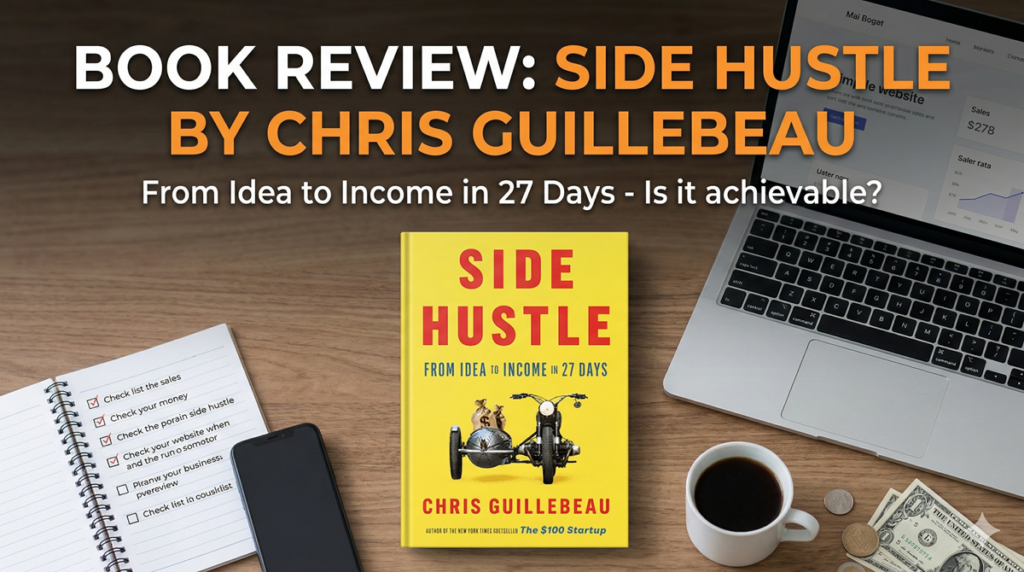
We picked up Side Hustle: From Idea to Income in 27 Days and put its method to the test over a few weeks. The book reads like a practical sprint—clear checkpoints, fast-moving examples, and hands-on prompts that pushed us to sketch and validate a small idea without getting bogged down in theory.

We liked how the author breaks the process into manageable steps and keeps the tone actionable rather than preachy. The approach helped us move from concept to a testable offer quickly, though some sections assume you’ll adapt examples to your niche and require extra work to tailor them. Overall, it’s heavy on practical momentum and light on long-winded business theory.
Bottom Line
If you want a hands-on guide to launch a small income stream fast, this book is a solid, no-nonsense playbook. Buy it now if you’re ready to treat your idea like a short sprint and start testing quickly: https://www.amazon.com/Side-Hustle-Idea-Income-Days/dp/1524758841
Overview of Side Hustle: From Idea to Income in 27 Days
We tested this compact guide to quickly validate and launch small businesses. It walks through idea selection, simple prototypes, and quick-paying customer tests over a 27-day framework.
We found the book practical and brisk; exercises pushed us to pick one idea and iterate fast. The tone is pragmatic, but some steps felt repetitive for readers already familiar with lean startup methods.
Overall, the short, actionable layout makes it easy to follow on a tight schedule, though those seeking deep strategy or advanced marketing tactics may need supplemental resources.
Practical Step-By-Step Plan
We tested the book by following its core 27-day framework and adapted it to our schedule. Start by carving 30–60 minutes daily for idea validation and customer interviews; we found short, focused sessions prevented overwhelm.
Next, iterate on your offer and create a simple sales page or listing; we built a basic page in a weekend and learned which points resonated. Use the mid-block days for low-cost marketing experiments—social posts, one paid ad, or outreach—and track what brings clicks.
Reserve the final week for scaling: automate repetitive tasks we hated doing, tighten messaging based on real feedback, and set clear revenue goals. The plan works if you stay disciplined, but expect to rework steps when real customers disagree with your assumptions.
Real-World Success Stories
We tested the book in our own small projects and found its step-by-step approach actually helps move ideas into action. Following the 27-day framework pushed us to pick one idea, validate it quickly, and start earning modest revenue within weeks.
What worked: the pragmatic exercises forced decisions, and the focus on low-cost experiments reduced risk. What didn’t: some sections felt repetitive if you’ve read other gig-economy guides, and a few examples sketched entrepreneurs at different scales without deep implementation detail.
Overall, the book served as a practical jumpstart for us—great for momentum and early wins, less useful if you need in-depth tactics for scaling.
Actionable Worksheets and Tools
We found the worksheets in Side Hustle practical and directly usable. They guided us through validating ideas, sketching quick offers, and mapping a 27-day launch plan without fluff.
The templates are simple fill-in-the-blank formats we actually used to draft outreach messages and pricing tests. Some sections felt repetitive, and a few worksheets assume access to basic marketing skills, but overall they sped up decision-making.
If you prefer hands-on materials, these tools make daily progress tangible and keep the project moving. They won’t replace deeper strategy work, but they get you to test and earn faster.
Author’s Unique Approach
We tested the book by applying its step-by-step method to a small service idea over a few weekends. The authors favor rapid validation and hands-on tasks, so we found ourselves doing quick market checks and simple sales experiments instead of deep planning.
That practical, sprint-style approach speeds learning and reduces wasted time, though it can feel rushed for projects that need more research. We appreciated the clear action prompts, but sometimes wished for more guidance on scaling beyond the initial 27-day framework.
Pros and Cons
We put the book through a hands-on read to see what actually helps someone launch a side project quickly.
Pros
- Practical, step-by-step approach that keeps momentum. We found the daily structure easy to follow and it pushed us to take small, concrete actions rather than overplan.
- Clear, relatable examples from real makers. The short case sketches made it simple to imagine applying tactics to our own ideas.
- Focus on validation and speed reduces wasted effort. We appreciated how the process emphasizes testing demand before investing too much time or money.
- Readable, concise chapters that work well in short bursts. We could pick it up for 15–30 minutes and come away with a usable next task.
Cons
- Not deep enough for complex businesses. When we tried to apply the exercises to more technical or product-heavy ideas, the guidance felt thin.
- Repetitive in places. A few concepts recur often, which helped reinforcement but sometimes slowed our progress through the book.
- Assumes basic comfort with online tools and marketing. Beginners who need hand-holding on platforms or ad basics may need supplementary resources.
- Pace may feel rushed for those with limited free time. The 27-day tempo expects regular daily work; skipping days can make the plan harder to follow.
Who Should Read This Book
We found this book most useful for people who want to test a small, practical business idea without quitting their day job. It suits anyone stuck between too many options or no clear next step and who needs a concise, step-by-step jumpstart.
We liked how the book breaks down actions into short, doable tasks; that makes it a good fit for busy professionals, side-giggers, and early-stage entrepreneurs who prefer pragmatic guidance over theory. It’s less helpful for readers seeking deep funding strategies or large-scale startup frameworks.
Customer Reviews
We found readers generally praise the book for its clear, actionable guidance on turning ideas into income. Many highlight how the step-by-step approach helped them move past overthinking and actually start small experiments.
Users often mention the writing is approachable and easy to follow, making complex decisions feel manageable. A few readers wished for deeper case-study detail or more advanced tactics after the initial 27-day plan.
Overall, the consensus feels practical: it’s useful for getting started and shaking loose momentum, though ambitious entrepreneurs may need additional resources as they scale.
Conclusion
After working through the book, we found it practical and action-focused. The pacing pushed us to move from idea to small-scale launch quickly, and the clear exercises helped trim overthinking.
We appreciated the balance of real-world stories and step-by-step prompts; some sections felt repetitive, but they reinforced key choices. Overall, this is a useful guide if we want a compact, realistic roadmap to test a side income without getting bogged down in theory.