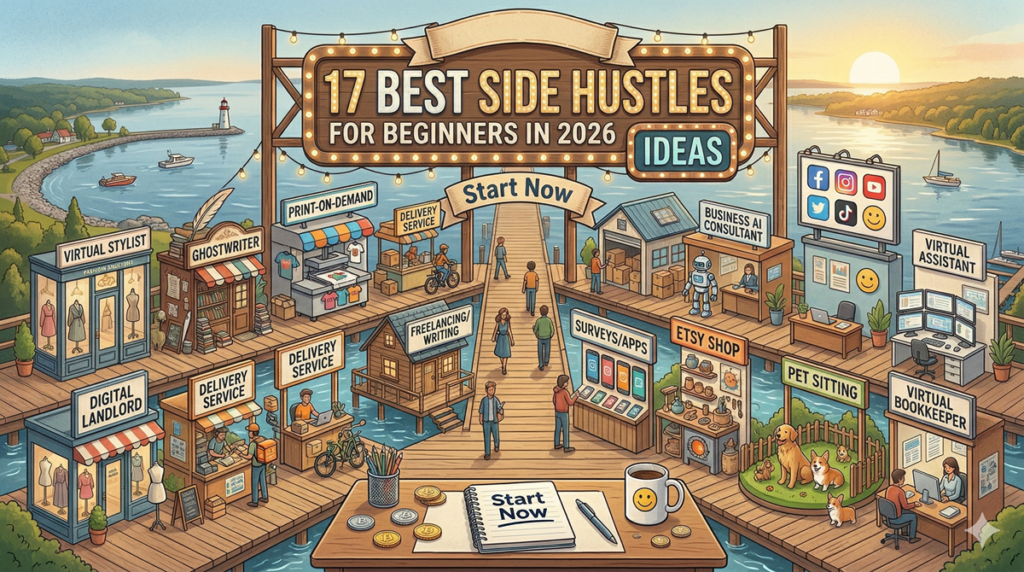

You can start a profitable side hustle with little experience and low startup cost by choosing one that matches your skills, time, and goals. Pick something that fits your schedule and skill level, and you’ll see faster returns and less burnout.
This post walks through practical, beginner-friendly options—online and hands-on—so you can spot the fastest path to extra income and growth. Expect clear steps to choose, start, and scale a side hustle you actually enjoy.
Key Takeaways
- Match a side hustle to your skills and available time.
- Start small with low-cost, beginner-friendly options.
- Build consistency first, then scale what works.
Understanding Side Hustles for Beginners

You can start a side hustle with little upfront cost, flexible hours, and work that fits specific goals like paying down debt, testing a business idea, or earning steady monthly income. Focus on realistic time commitments and skills you already have.
What Is a Side Hustle?
A side hustle is a paid activity you run outside your main job to earn extra money or build new skills. It can be hourly work, project-based freelancing, selling products, or recurring income like memberships.
Typical examples include freelance writing, ride-share driving, tutoring, selling handmade goods, and microservices on marketplaces. You control pricing, schedule, and client selection. Most beginners start with low-cost options: use a laptop, free marketplaces, and social profiles to find first customers.
A clear early goal helps: cover a specific bill, save a set amount, or validate a business idea. Track hours, revenue, and basic expenses from day one so you know if the hustle meets your goal.
Benefits of Starting a Side Hustle
You increase income quickly with gigs that match your available hours. That extra cash can pay down debt, fund savings, or cover irregular expenses without touching your main salary.
You also gain practical experience in client work, marketing, and basic financial management. Those skills transfer to promotions, career changes, or scaling the hustle into a full-time business.
Other benefits include testing business ideas with low risk and building a portfolio or customer list. Many side hustles let you scale gradually—start one hour a day and expand as demand grows.
Common Challenges Faced by Beginners
Time management is the most frequent issue: balancing a full-time job, personal life, and new work leads to burnout if you overcommit. Set a weekly hour cap and a simple schedule to protect rest and work quality.
Finding customers can feel slow at first. Expect 4–12 weeks to land consistent clients; use targeted platforms, referrals, and one clear service offering to shorten that period. Price too low and you waste time; price too high and you deter first buyers. Test mid-range rates and adjust after 2–3 projects.
Administrative tasks—invoicing, taxes, and record-keeping—also eat time. Use basic tools (spreadsheet, invoicing app) and track income separately to avoid surprises at tax time.
How to Choose the Best Side Hustle

Focus on options that match what you can do well, how much time you can realistically give, and what you can afford to start. Choose one clear test idea to try for 4–8 weeks before committing long term.
Assessing Your Skills and Interests
List skills you already use at work and hobbies you enjoy. Rank them by marketability: technical skills (coding, design), people skills (teaching, sales), and physical or practical skills (handyman, pet care). Prioritize skills that solve a common problem—tutoring for math and language learners, basic website builds for local businesses, or social-media help for service providers.
Match interest to repetitive work. If you dislike repetitive tasks, avoid data-entry or bulk product flipping. If you enjoy variety and people, pick gigs like freelancing, tutoring, or event assistance. Finally, identify one skill you can productize quickly (e.g., 1-hour consult, short course, or standardized service package) and outline a simple offering.
Understanding Time Commitment
Calculate available weekly hours after essentials (job, family, sleep). Be specific: if you have 8 evening hours, dedicate 3–5 to the side hustle and reserve 2 for admin and learning. Estimate how long tasks take: client acquisition (5–10 hours first month), service delivery (2–6 hours per project), and accounting (1–2 hours weekly).
Choose hustles with predictable time blocks if your schedule is tight—scheduled tutoring sessions, delivery shifts, or gig-platform tasks. For variable-time hustles like freelancing, set a weekly cap and use a calendar to block work sessions. Track actual time for 4 weeks and adjust your plan based on real data.
Estimating Startup Costs
Identify one-time and recurring costs before you start. Common items: tools or equipment, software/subscriptions, marketing (logo, simple website), and platform fees. Create a short table to estimate:
| Cost type | Typical range | Notes |
|---|---|---|
| Equipment | $0–$500 | Phone upgrades, basic tools |
| Software | $0–$50/month | Scheduling, invoicing, editing |
| Marketing | $0–$200 | DIY site, ads, business cards |
| Platform fees | 5–30% per sale | Marketplaces, gig apps |
Start with the lowest-cost route to validate demand. If you need training, compare free resources (YouTube, Coursera audit) versus paid courses; only buy paid training if you project clear ROI within 3 months. Build a simple breakeven estimate: (monthly recurring costs + average project cost) / expected monthly clients = minimum price to charge.

Popular Online Side Hustles
You can pick options that match your skills, time, and income goals. Focus on roles with clear pay structures, minimal startup cost, and fast feedback so you can scale or stop quickly if it doesn’t fit.
Freelancing Opportunities
Freelancing covers short-term projects like copywriting, graphic design, web development, and social media management. Create a focused profile on platforms such as Upwork, Fiverr, or Freelancer that highlights a niche skill, two strong samples, and your hourly or project rates.
Begin by bidding on small, well-defined jobs to build reviews. Use a simple pricing table to present common offers (e.g., basic: 1 revision, standard: 3 revisions, premium: expedited delivery). Track time with a timer app and set clear milestones in contracts to avoid scope creep.
Invest in one paid portfolio piece or a small certification that proves competence. Aim for repeat clients by offering a discount on the second project or packaged services that save them time.
Remote Customer Service Roles
Remote customer service positions include chat support, email triage, and inbound phone support. Companies like Shopify, Amazon, and remote staffing firms regularly hire entry-level agents with basic tech and communication skills.
Prepare a quiet workspace, reliable internet, and familiarity with common tools (Zendesk, Freshdesk, or Intercom). Expect structured schedules and performance metrics such as average handle time, first response rate, and customer satisfaction score.
Highlight prior customer-facing experience, problem-solving examples, and the ability to follow scripts while keeping a personable tone. Look for roles that list hourly pay, shift flexibility, and training; contract or part-time positions can be a low-commitment way to start.
Selling Products on Marketplaces
You can sell physical goods on Etsy, eBay, Poshmark, or Amazon, or digital products like printables and templates on Etsy and Gumroad. Start by validating one product with a small batch or a mockup listing before investing heavily in inventory.
Optimize listings with clear photos, 5–7 bullet-point benefits, and targeted keywords in titles and tags. Use a simple cost spreadsheet that includes production, platform fees, shipping, and target margin to set prices that cover costs and profit.
Consider print-on-demand or dropshipping to avoid inventory risk. Track conversion rate and run low-cost ads to test demand; scale items that reach a consistent order volume and good review ratings.
Online Tutoring and Teaching
Online tutoring covers K–12 subjects, college prep, language teaching, and skill-based classes (coding, Excel). Platforms like VIPKid, Tutor.com, Wyzant, and Teachable let you connect with students or sell structured courses.
Define your lesson plan, session length, and pricing—common rates range from $20–$60 per hour depending on subject and credentials. Record a short demo lesson and request a student review after the first session to build credibility.
Use scheduling and billing tools (Calendly, Stripe) to streamline bookings and payments. Offer a free 15-minute trial to convert hesitant learners and provide a clear learning outcome for each package to encourage repeat bookings.
Creative Side Hustles for Beginners
These options let you turn creative skills into revenue with low startup costs and flexible hours. Each path emphasizes practical steps you can take immediately: set up accounts, practice consistently, and focus on niche markets or platforms that match your style.
Print-on-Demand Design
Print-on-demand (POD) lets you sell designs on T-shirts, mugs, and phone cases without inventory. Create graphics using tools like Canva or Adobe Illustrator, then upload them to platforms such as Printful, Redbubble, or Teespring.
Focus on niches with clear audiences—hobby groups, professions, local pride, or micro-trends. Use keyword-rich titles and tags to improve discoverability on platform search and Google.
Pricing and margins vary: factor in base product cost, platform fees, and shipping when setting retail prices. Test multiple designs and monitor which art styles, colorways, and product types sell.
Scale by batching designs, outsourcing mockup creation, or expanding to multiple POD platforms. Keep brand consistency across listings and use simple A/B tests on pricing and promotional copy.
Content Creation for Social Media
Content creation can earn through ads, sponsorships, affiliate links, and digital products. Pick one or two platforms that match your strengths—short videos on TikTok/Reels, image-driven posts on Instagram, or long-form on YouTube.
Develop a content calendar with recurring themes (tips, behind-the-scenes, tutorials) to build viewer expectations. Optimize each post with clear hooks, captions that drive action, and relevant hashtags or keywords.
Monetize early with affiliate marketing and low-effort digital products (templates, presets, guides). Track engagement metrics—watch time, saves, shares—and double down on formats that perform.
Invest in basic gear (good smartphone, lighting, simple microphone) and learn basic editing. Consistency and a recognizable visual style matter more than perfect production at the start.
Photography and Stock Photo Sales
You can earn passive income by selling photos to stock libraries like Shutterstock, Adobe Stock, and Getty. Focus on commercial-friendly images: lifestyle scenes, workplace settings, and authentic candid shots that businesses might license.
Create keyword-rich filenames and metadata to improve search visibility. Upload regularly and target underserved niches such as diverse age groups, remote work setups, or regional landmarks.
Also sell prints, social-media-ready bundles, or image packs on your own website or Etsy. Learn basic post-processing to make images look polished while keeping them natural.
Protect your work with model releases for recognizable people and property releases for private locations. Track which subjects and compositions sell best, then replicate and expand those themes.
Tips for Growing Your Side Hustle
Focus on scheduling real work blocks, using low-cost tools to reach customers, and connecting with peers who can refer clients or share tactics. Small, consistent improvements in time use, online visibility, and relationships compound into steady revenue growth.
Time Management Strategies
Block your calendar with 2–3 fixed work sessions each week for core tasks like product creation, client work, or marketing. Treat these blocks as nonnegotiable; use a time tracker (Toggl, Clockify) to measure where minutes go and cut activities that don’t move revenue or growth forward.
Prioritize a weekly plan with 3 outcome-based goals (e.g., “complete 3 edits,” “publish one Instagram post,” “pitch five clients”). Use the Pomodoro method for focused work and schedule admin tasks into a single shorter session to avoid context switching. Delegate or automate repetitive tasks—set up invoice templates, canned email responses, and scheduled social posts—to reclaim at least one hour per week.
Building an Online Presence
Pick one primary platform that fits your audience—LinkedIn for B2B services, Instagram or TikTok for visual products, and a simple website or Etsy for e-commerce. Keep branding consistent: a clear one-line value statement, a professional photo or logo, and 3–5 portfolio items or case studies that show results.
Use a content plan with weekly touches: one long-form post (blog or LinkedIn), two short social posts, and one paid or boosted post each month to expand reach. Track metrics you can act on: inquiries, conversion rate from profile visits, and cost per lead. Optimize profiles with keywords reflecting services you offer and a clear call to action—“book a 15-minute consult” or “order sample pack.”
Networking With Other Side Hustlers
Join two niche communities where your ideal clients or collaborators gather—Facebook groups, subreddit communities, or local coworking meetups. Contribute regularly by offering help, sharing wins, and asking one focused question per week to build recognition without self-promotion fatigue.
Set a networking routine: reach out to one new peer per week for a 15-minute virtual coffee and exchange a specific resource or referral. Track contacts in a simple spreadsheet with date, value exchanged, and follow-up action so relationships turn into referrals or collaborations. Consider reciprocal agreements like guest posts, bundle offers, or co-hosted workshops to widen exposure with minimal cost.
Scaling and Transitioning to Full-Time
You’ll learn how to spot where revenue and demand can grow, when your side hustle can replace your salary, and how to weigh financial and personal risks before you quit your day job.
Identifying Growth Opportunities
Start by tracking the three metrics that drive scale: monthly revenue, customer acquisition cost (CAC), and repeat-purchase rate. Use simple spreadsheets or tools like Stripe, PayPal, or Google Analytics to get accurate monthly numbers.
Look for consistent month-over-month revenue growth (3–10% for many early businesses) and a CAC that stays below your average customer lifetime value (LTV). If LTV > 3× CAC, you likely have room to invest in paid acquisition.
Map operational bottlenecks: time spent on client onboarding, product fulfillment, or admin tasks. Automate or outsource repetitive work (use Zapier, virtual assistants, fulfillment services) so you can focus on activities that increase revenue.
Test pricing and packaging with small cohorts before changing broadly. Run one A/B test at a time and measure lift in conversion or average order value. Scale the tactics that provide predictable, measurable gains.
When to Consider Going Full-Time
Set a concrete financial threshold: your target monthly net income should equal your current take-home pay plus a 20–30% buffer for volatility. Build a 6–12 month runway in savings or a line of credit that covers personal and business expenses.
Confirm demand durability by evaluating at least six months of steady revenue and a growing pipeline of repeat customers or contracts. Avoid relying on one large client for more than 30–40% of revenue unless you have contingency plans.
Ensure business systems are repeatable: documented processes, at least one reliable contractor, and basic accounting (monthly P&L). If these systems exist and your runway and net income target align, you can plan a phased exit from your job—first reducing hours, then leaving once revenue stabilizes.
Balancing Risk and Reward
Quantify risks: income volatility, health insurance gaps, lost benefits, and tax changes. Put numbers on each risk and decide which you can absorb or insure against. Acquire short-term disability or private health coverage if your job’s benefits are a major loss.
Create a contingency plan with trigger points: e.g., “If monthly revenue falls 20% for two consecutive months, pause hiring and cut discretionary ad spend.” Use conservative forecasts—model best, expected, and worst cases.
Preserve optionality by keeping a part-time consulting retainer or freelance contract for at least six months after going full-time. That cushion reduces pressure to chase short-term sales and lets you focus on sustainable growth.