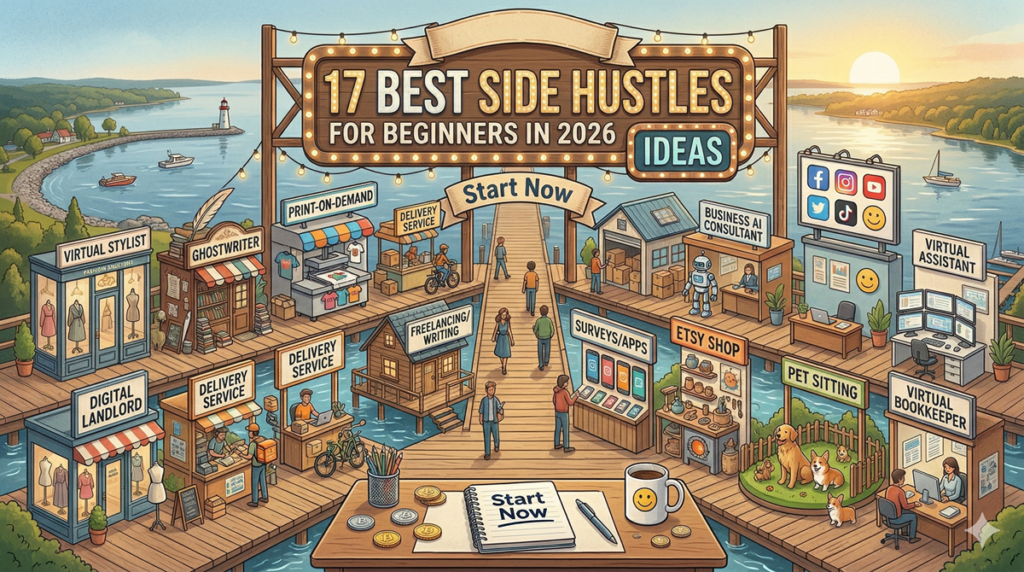

Balancing a full-time job and a side hustle feels possible when you pick options that fit your schedule and skills. You can start side gigs that reliably earn extra income without quitting your day job by choosing flexible, scalable options like freelancing, online services, selling digital products, or low-effort passive income streams.
This post helps you spot side hustles that match your available hours, income goals, and risk tolerance, then shows practical steps to launch and grow them while protecting your primary career. Expect clear examples, realistic time estimates, and simple strategies to keep your workload sustainable and profitable.
Key Takeaways
- Focus on flexible, low-conflict side hustles that fit around a 9–5.
- Prioritize options that scale from a few hours a week to higher income.
- Use straightforward time-management and growth tactics to protect your full-time role.
Understanding Side Hustles for Full-Time Professionals

You can boost income, test a business idea, or build skills without quitting your job. Choose a side hustle that fits your hours, leverages existing skills, and matches the earnings goal you set.
Why Start a Side Hustle With a Full-Time Job
You might start a side hustle to hit specific financial targets: pay down debt, save for a house, or add 10–30% to your monthly income. Some side hustles—freelance consulting, tutoring, or niche e-commerce—can reach consistent monthly revenue within 3–6 months if you commit 5–10 hours per week.
Other reasons include skill development and risk reduction. Use your evenings to learn client management, digital marketing, or product development while your full-time job maintains steady pay and benefits. Prioritize side hustles with low startup costs and clear demand signals, such as freelancing platforms, local service apps, or targeted marketplaces.
Identifying Skills and Time Availability
Start by listing marketable skills you use at work and hobbies that produce tangible outputs: writing, spreadsheets, coding, design, teaching, or hands-on trades. Rate each skill for demand (high/medium/low) and setup time (low: <10 hours, medium: 10–40 hours, high: 40+ hours).
Create a weekly time map showing fixed commitments (commute, family, sleep) and blocks you can reliably use. Aim for 5–12 hours weekly to begin; quality beats quantity. If you only have 3–5 hours, favor asynchronous side hustles like template sales, curated newsletters, or batchable tasks (photo editing, transcription).
Quick decision aid (table):
- Skill: Market demand | Setup hours | Best fit
- Writing: High | 10–20 | Content freelancing, newsletters
- Excel/Analytics: Medium | 10–30 | Reporting services, tutoring
- Crafts/Products: Medium | 20+ | E-commerce, local markets
Balancing Work and Life
Set strict boundaries: block side-hustle hours on your calendar and treat them like appointments. Communicate schedule limits to clients and keep response SLAs realistic (e.g., 24–48 hours). This prevents spillover into family or sleep.
Automate and outsource routine tasks early. Use scheduling tools, templates, and inexpensive virtual assistants for admin. Protect at least one day or evening per week with zero side-hustle work to avoid burnout.
Monitor three metrics weekly: hours worked, income earned, and stress/energy level (low/medium/high). If stress trends upward or income per hour falls below a threshold you set, scale back or pivot to higher-margin tasks.
Top Flexible Side Hustles to Start After Work

These options let you earn reliably without quitting your job. Each focuses on tasks you can schedule in evenings or weekends and scale up as your time and earnings grow.
Freelancing Opportunities
Freelancing gives you repeatable projects you can book by the hour or per deliverable. Pick a skill you can complete in 1–10 hour blocks—graphic design, web development, UX audits, or social media management work well for after-hours scheduling.
Create a simple service menu with 3–5 offerings and fixed prices to reduce back-and-forth with clients. Use platforms like Upwork and Fiverr for early leads, then move higher-value clients to direct contracts. Track time with Toggl or Clockify and set clear delivery windows to protect your evenings.
Build a small portfolio site and a one-page PDF you can send to prospects. Price initial projects to reflect your experience but leave room for raises after two or three successful jobs.
Remote Consulting
Remote consulting turns your day-job expertise into paid advice sessions or short-term projects. Offer 60–90 minute strategy calls, audit packages, or 3–6 week implementation sprints you can do outside core work hours.
Target specific problems you solve—cost reduction, process documentation, marketing funnels, or technical architecture. Use LinkedIn posts and targeted outreach to find clients; ask for a referral fee or introduction from past colleagues. Charge by project or hourly, and require a written agreement to define scope and deadlines.
Limit client onboarding to 1–2 slots per week to keep your primary job secure. Use Zoom, shared docs, and a simple invoicing tool (FreshBooks, Wave) to maintain professional boundaries.
Online Tutoring and Teaching
Online tutoring fits tightly into evenings and weekends because sessions often last 30–90 minutes. Teach standardized test prep, coding languages, math, or conversation-level English based on demand in your time zone.
List your availability in clear blocks, accept recurring weekly sessions, and use platforms like Wyzant or Preply for discovery if you don’t want to build your own marketing. Prepare a reusable lesson plan template and short diagnostic tests to show progress quickly.
Set cancellation and rescheduling rules, and offer package discounts to lock in students. Track student outcomes with simple progress reports to justify higher rates over time.
Content Writing and Blogging
Content work includes short articles, newsletters, SEO blog posts, and ghostwriting long-form pieces you can batch on weekends. Aim for clear niches—finance explainers, SaaS product copy, health summaries—to speed research and command better rates.
Pitch directly to publications and businesses, or use ProBlogger and Contently for leads. Deliverables with fixed word counts (500–1,500 words) make scheduling predictable. Use an editorial calendar and templates to turn research into drafts faster.
Monetize further by creating a focused niche newsletter or evergreen guides you sell once and promote. Set a target rate per word or per article, and increase it as you collect testimonials and steady clients.

Lucrative Digital and Online Side Gigs
You can build income streams that fit evenings and weekends by selling products, promoting other people’s offerings, or managing company social channels. Each option requires different startup time, technical skills, and ongoing hours—pick the one that matches your schedule and strengths.
E-Commerce and Dropshipping
E-commerce lets you sell physical or digital products without leaving your day job. With dropshipping, you list supplier products on your store and only buy inventory after a customer orders, which minimizes upfront cost and storage needs. Expect work in niche research, product listing creation, supplier vetting, and customer support.
Key tactical steps:
- Validate niche with simple keyword and competitor checks.
- Use platforms like Shopify, WooCommerce, or Etsy depending on product type.
- Automate order routing and tracking with apps (e.g., Oberlo, Spocket) to reduce time spent.
- Maintain margins by accounting for shipping fees, returns, and ads.
You’ll spend most time upfront building listings and ad funnels; once live, focus on customer service and incremental optimization. If you sell digital goods instead, you remove shipping headaches but must provide ongoing updates and support.
Affiliate Marketing
Affiliate marketing pays commissions when you refer buyers to other companies. You earn by placing tracked links in blog posts, email newsletters, YouTube videos, or niche landing pages that target high-intent queries.
Actionable items:
- Choose programs with fair commission rates and reliable payouts (Amazon Associates for volume, specialized SaaS and course affiliates for higher per-sale payouts).
- Create content that solves a problem and naturally integrates product recommendations.
- Track performance with UTM parameters and affiliate dashboards to optimize conversion paths.
You don’t handle inventory or support, but success depends on consistent content production and SEO or paid traffic management. Start with one platform and product vertical; scale by repurposing top-converting content into other channels.
Social Media Management
Social media management offers recurring revenue by running postings, ads, and community engagement for small businesses. You can package services as monthly plans—content calendars, ad campaigns, and performance reports—so clients have predictable deliverables.
Practical setup:
- Define a clear service package (e.g., 12 posts/month, basic community replies, one paid campaign).
- Use scheduling tools like Buffer, Hootsuite, or Later to batch content and save evenings.
- Present simple KPIs: follower growth, engagement rate, and leads generated.
Start with local businesses or niche brands where you can show quick wins. Charge by retainer or per-project; raise fees as you prove ROI with documented case studies and month-to-month improvements. Continuous learning in platform algorithm shifts and ad targeting will keep your service valuable.
Creative and Passive Income Ideas
You can create income streams that require front-loaded work and low weekly maintenance. Focus on products or platforms that scale—digital files, pooled real estate investments, and print-on-demand items all fit this model.
Selling Digital Products
Create files once, sell repeatedly. Build digital products that solve a specific problem for a defined audience: templates for small-business invoices, Lightroom presets for portrait photographers, resume templates for mid-career professionals, or short, niche e-books (10–30 pages) on how to use a particular tool. Price items between $5–$50 depending on complexity and audience willingness to pay.
Protect your time with systems: use a single landing page, automated delivery (Gumroad, Payhip, or Shopify), and an email sequence that converts traffic. Track conversion rates and A/B test pricing and descriptions. Expect initial marketing effort—social posts, one paid ad, or a mention in a relevant newsletter—and then low-maintenance revenue after product-market fit.
Investing in Real Estate Crowdfunding
Real estate crowdfunding lets you invest small sums into commercial or residential projects through platforms like Fundrise, CrowdStreet, or regional alternatives. Choose between equity (higher upside, longer hold, irregular distributions) and debt (fixed returns, shorter terms). Minimums often range from $10 to $25,000 depending on the platform and deal type.
Evaluate platforms by historical returns, fee structure, liquidity (lock-up periods), and transparency of asset-level performance. Diversify across geographic markets and property types to reduce risk. Treat these investments as illiquid alternatives in your portfolio and match them to your time horizon and risk tolerance.
Print on Demand Businesses
Design products—t-shirts, mugs, phone cases—and publish them without inventory using print-on-demand (POD) services like Printful, Teespring, or Redbubble. Focus on narrow niches (hobby communities, local pride, micro-trends) where specific designs resonate and you can target ads or organic content effectively.
Optimize listings with clear mockups, concise titles, and targeted tags. Use low-cost marketing: Instagram reels showcasing designs, niche Facebook groups, or a small search ad test. Track profit per sale after platform fees and advertising; typical net per item ranges from $5–$20. Scale by automating uploads with CSVs or integrating POD with a Shopify store and adding seasonal or limited-edition drops to keep momentum.
Time Management Strategies for Busy Professionals
Focus on protecting core work hours, batching side-hustle tasks, and using automation to cut repetitive work. Prioritize high-value tasks and set clear time limits so your side income grows without eroding your main-job performance or free time.
Setting Boundaries Between Jobs
Decide exact time blocks for your full-time job, side hustle, and personal life. Put those blocks on your calendar as nonnegotiable events — for example, 9:00–17:30 for work, 19:00–20:30 for side-hustle tasks three evenings a week. Treat those blocks like meetings you must keep.
Communicate limits to clients, partners, and household members. Use a professional auto-reply for side-hustle messages during work hours and specify expected response windows. That reduces interruptions and prevents last-minute client demands during your core job.
Enforce physical and digital separation. Work from a different browser profile or device for side tasks, disable nonessential notifications during work hours, and close your side-hustle tabs when your paid job begins.
Maximizing Productivity
Identify the 20% of side-hustle tasks that produce 80% of results and schedule those first. Examples: client outreach, proposal writing, and product listings typically move income fastest. Deprioritize low-value activities like endless tweaking or social media scrolling.
Use time-boxing and the Pomodoro technique to keep sessions focused. Work 45–60 minute deep blocks for creative or analytical tasks, followed by short breaks. Track time for recurring activities to build realistic estimates and avoid overcommitment.
Batch similar tasks to reduce context switching. Group email replies, content creation, or order fulfillment into single sessions. That yields faster output and preserves cognitive energy for your full-time responsibilities.
Automating Side Hustle Tasks
Automate repetitive tasks to save hours weekly. Use tools like scheduling apps (Calendly), email templates, and invoicing software (QuickBooks, Wave) to streamline client flow. Connect systems with Zapier or Make to move data between apps automatically.
Set up recurring workflows for onboarding, follow-ups, and content publishing. Example: when a client fills a form, trigger an automated welcome email, calendar invite, and invoice. That reduces manual steps and keeps client experience consistent.
Invest time up front to build templates and automations; expect a return in saved hours within weeks. Monitor automated processes monthly to fix broken links, update messaging, and ensure compliance with privacy or payment changes.
Scaling Your Side Hustle for Greater Success
You’ll learn when it makes sense to leave your job, how to hand off tasks that slow growth, and how to turn irregular earnings into reliable income. Focus on measurable milestones, repeatable systems, and protecting your personal cash flow.
Evaluating When to Go Full Time
Set objective financial milestones before quitting. Aim for at least 6–12 months of personal living expenses saved plus three consecutive months of side-hustle net profit equal to your take-home pay. Track net income after taxes and business costs, not gross revenue.
Measure workload and growth trajectory. If demand requires 20+ hours weekly and automations or hires still leave bottlenecks, that signals scaling pressure. Check market signals: growing repeat customers, rising customer acquisition rates, and stable or improving conversion metrics.
Factor risk and benefits. Consider health insurance, retirement contributions, and unemployment safety nets you’d lose. Create a 12-month scenario plan: best, base, and worst case with yields, burn rate, and break-even month.
Outsourcing and Delegating
Start by listing recurring tasks that consume time but have predictable outputs: bookkeeping, customer support, content editing, and order fulfillment. Outsource routine tasks first to free your core hours for revenue-generating work.
Use clear SOPs (standard operating procedures) and short video walkthroughs for each outsourced task. Track outcomes with simple KPIs: response time, error rate, and task completion rate. Pay contractors by output or hourly, and run 30–90 day trial periods.
Automate before hiring where possible. Use tools for scheduling, invoicing, and email sequences to lower ongoing labor costs. Hire specialists for high-skill work (ads, SEO, legal) and freelancers for repeatable operations.
Long-Term Income Planning
Diversify revenue streams to reduce single-source risk. Add complementary products or services—subscriptions, digital products, retainer clients, or licensing—to smooth seasonality and scale without linear time increases.
Build predictable cash flow with subscriptions or retainer contracts that cover fixed costs first. Maintain a reserve equal to 3–6 months of business operating expenses separate from personal savings.
Plan for taxes and benefits. Estimate quarterly tax payments, set aside 20–30% of profit for taxes if you’re U.S.-based, and budget for health and retirement contributions. Reinvest a portion of profits (10–30%) into marketing, product development, or automation to sustain growth.