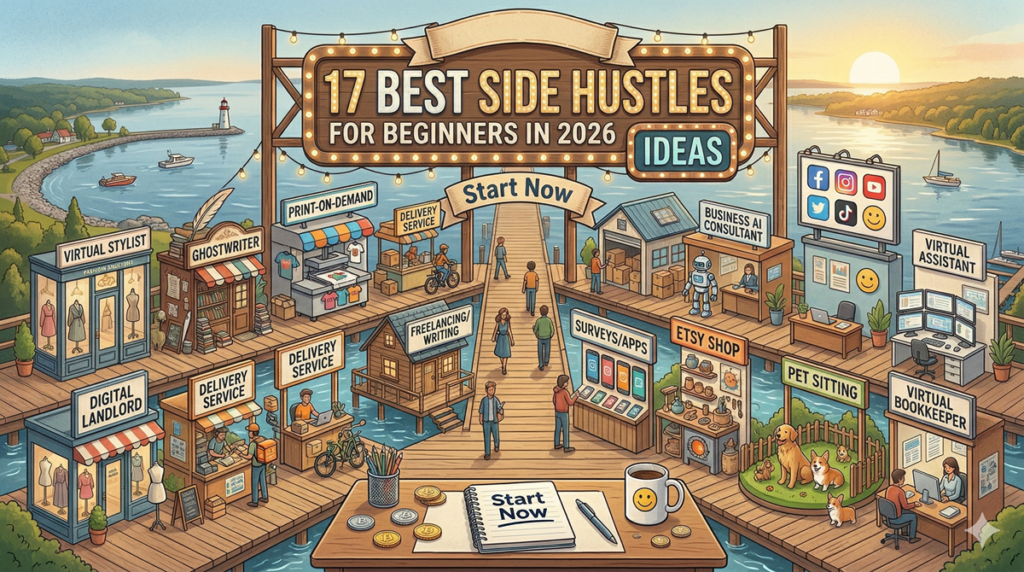

You can start a profitable side hustle today without spending a dime by using skills you already have and free online tools. Use writing, tutoring, microtasking, or selling digital services to begin earning quickly while you learn what works for you.
Pick projects that match your schedule and strengths, and use free marketplaces, social platforms, and community networks to find your first clients. Small, consistent effort plus smart use of free tools can turn zero-cost side hustles into reliable income streams.
Stay flexible and test a few ideas fast so you discover which one scales and fits your life.
Key Takeaways
- Start with what you already know and use free platforms to get your first gigs.
- Focus on small, consistent actions that build credibility and income.
- Test ideas quickly and scale the ones that show traction.
What to Know Before Starting a Free Side Hustle

You can begin without cash by using your time, existing tools, and skills. Expect trade-offs: lower financial risk, but more reliance on your schedule, learning curve, and persistence.
Benefits of Free Side Hustles
Free side hustles let you test ideas with minimal financial risk. You can validate demand for a service—like freelance writing, tutoring, or virtual assistance—using free platforms (Upwork, Fiverr, local Facebook groups) and free tools (Google Docs, Canva free plan).
Starting free preserves cash flow for essentials and emergencies. That reduces pressure to monetize immediately and lets you iterate on pricing, packages, and target clients based on real feedback.
You also build demonstrable experience and assets without investment. Examples: a portfolio of articles, a GitHub repo, or social proof from satisfied clients. Those outputs increase your marketability and make it easier to scale later.
Common Myths About Starting with No Investment
Myth: “No money means no credibility.” Reality: Credibility comes from consistent delivery and documented results. Offer low-cost or pro bono work to build case studies and testimonials that attract paying clients.
Myth: “You need special equipment or formal certification.” Reality: Many gigs require only a phone, laptop, and internet. For tasks that need skills—coding, design, tutoring—you can use free courses and practice projects to reach market-ready competence.
Myth: “Free hustles can’t scale.” Reality: You can scale most free starts by systematizing work, raising prices, outsourcing tasks, or switching to paid tools once revenue justifies them. Track time, conversion rates, and client acquisition cost to identify scale points.
Evaluating Your Skills and Interests
Start by listing hard skills (e.g., copyediting, Excel, web dev) and soft skills (communication, scheduling). Mark which skills you can monetize now and which need minor practice. Use a simple matrix: Skill | Market Demand | Time to Improve.
Ask which tasks you enjoy at least half the time. Enjoyment matters because you’ll invest free hours outside other obligations. Prioritize ideas where your skills meet clear demand and where you can produce a sample within a week.
Validate quickly: perform one client outreach, create one portfolio piece, or run a free trial. Measure response rate and feedback, then decide whether to continue, refine, or pivot.
Online Side Hustles You Can Start for Free

You can begin earning without upfront costs by using platforms that match skills to buyers, teaching or tutoring on-demand, handling customer inquiries from home, or creating content that attracts paid opportunities. Each path requires time to build credibility, a clear niche, and consistent delivery.
Freelancing Platforms
Freelance marketplaces let you sell specific services—writing, design, code, social media, or admin work—without paying to list gigs. Create profiles on sites like Upwork, Fiverr, or PeoplePerHour, focusing your title and overview on a single measurable service (e.g., “LinkedIn profile copy that boosts views”).
Use a short portfolio: three best samples, one case study with results, and client testimonials once you have them. Set an introductory price or offer a small trial task to get your first reviews. Optimize proposals by referencing the buyer’s brief, stating a clear deliverable, and proposing a timeline.
Protect yourself: use platform contracts or simple written agreements covering scope, revisions, and payment milestones. Track time and tasks with a free tool (Toggl, Google Sheets). Reinvest earnings into a professional portfolio site or paid listings only after you’ve proven demand.
Online Tutoring Opportunities
Tutoring platforms let you teach subjects, test prep, or language skills using your phone or laptop camera. Join marketplaces like Tutor.com, Wyzant, Preply, or local school district programs that accept uncertified tutors for basic subjects and ESL.
List specific subjects and grade levels you teach, plus sample lesson outcomes (e.g., “improve algebra test score by two grade levels in six weeks with weekly practice”). Record a 60–90 second intro video demonstrating your teaching style. Offer a free 15-minute diagnostic session to assess a student’s level and propose a short syllabus.
Prep reusable lesson plans and printable worksheets to save time. Use Google Classroom, Zoom, or free whiteboard apps for sessions. Set clear cancellation and refund rules and request feedback after three sessions to build a review profile.
Remote Customer Support
Companies hire remote support agents for chat, email, and phone work that you can start without equipment beyond a computer and reliable internet. Apply to remote roles on job boards, company career pages, or gig sites that list part-time and flexible shifts.
Highlight relevant soft skills: patience, written clarity, and time management. Prepare a short typed sample answering common customer queries and a one-page log of any past support or sales metrics you managed. Familiarize yourself with popular helpdesk tools (Zendesk, Freshdesk) using free trials or tutorials.
Expect scheduled shifts and performance metrics (first response time, resolution rate). Use noise-cancelling headphones for voice work and maintain a distraction-free workspace. Track earnings and hours precisely when juggling multiple part-time gigs to avoid schedule conflicts.
Content Creation
Content creation includes blogging, short-form video, podcasting, and social media that you can start with free platforms and a smartphone. Choose a narrow niche tied to your skills—e.g., budget meal prep for two, 10-minute home workouts, or freelance invoicing tips—and publish consistently.
Start on free channels: Medium, YouTube, TikTok, Instagram, or Anchor for podcasts. Plan content using a simple editorial calendar and batch-produce to maintain cadence. Monetize later through affiliate links, sponsorships, digital products (checklists, templates), or ad revenue once you hit platform thresholds.
Focus first on audience growth metrics: watch time, engagement rate, and subscriber growth. Use free analytics (platform dashboards) to test formats and topics. Protect your time with a content workflow: research, script, record, edit, publish—in that order—to avoid burnout while scaling.

Creative and Artistic Free Side Hustle Ideas
You can start offering visual, audio, and editing services using tools and devices you already own. Focus on a clear niche, set simple pricing, and use free platforms to find your first clients.
Photography Services
Offer niche shoots that need little gear—portraits, product photos for Etsy sellers, and local event coverage. Use your smartphone with natural light and a basic reflector (even white poster board) to get clean results. Learn basic composition and editing with free apps like Snapseed or Lightroom Mobile free tier.
Set clear deliverables: number of edited photos, turnaround time, and usage rights. Price by package (e.g., 10 edited images for $75) or hourly for events. Showcase a small, curated portfolio on Instagram and a free site (e.g., Google Business Profile or a simple Linktree). Reach clients via local Facebook groups, Marketplace, and direct outreach to small businesses.
Graphic Design Projects
Start with logo tweaks, social media templates, and simple flyers using free tools like Canva or Gravit Designer. Choose 2–3 deliverables you do well and build template-based workflows to save time. Keep source files organized and deliver both PNG/JPEG and an editable file when possible.
Quote fixed prices for common items (Instagram kit, $40; logo refresh, $60) and add a revision policy (one round included, extra $15). Use Fiverr, Upwork, and your own Instagram to display before/after examples. Protect yourself with a simple agreement: scope, timeline, payment terms (50% upfront for larger jobs), and final file types.
Voiceover Work
Record narration, ads, or explainer scripts using a quiet room and a smartphone or entry-level USB mic. Use free software like Audacity for noise reduction and basic EQ. Practice pacing and breaths; keep demo clips under 60 seconds and target specific markets (e-learning, apps, local ads).
Create a short, clear demo reel with 3–5 different reads and host it on SoundCloud or a free website. List services with minute-based rates (e.g., $30 per finished minute) and specify commercial use terms. Pitch to podcasters, indie game developers, and small businesses on LinkedIn and Fiverr, and ask satisfied clients for referrals.
Service-Based Side Hustles With No Upfront Costs
You can start these service-based hustles using skills you already have, free neighborhood or online listings, and basic items you likely own. Each option emphasizes clear steps for getting clients, setting rates, and protecting yourself without required startup capital.
Pet Sitting
Offer pet sitting through local apps, community boards, and social media groups to reach nearby owners quickly. Start by creating a short profile with your experience, availability, and two references; include clear rates for visits, overnight stays, and extra tasks like medication or grooming.
Bring essentials you already own: a leash, basic treats, a smartphone for photos and updates, and a secure method to accept payments (Venmo, PayPal, or cash). Write a simple pet-care agreement that lists emergency contacts, vet information, and liability terms to protect both parties.
Set rates by checking local listings and undercutting slightly while remaining profitable. Offer an initial discounted meet-and-greet to build trust and collect testimonials. Ask satisfied clients for referrals and post photos of happy pets (with permission) to grow your local reputation.
House Cleaning
You can begin house cleaning using common household supplies and a reliable method for booking clients. Advertise quick, honest service on neighborhood platforms and to neighbors; offer one-time deep cleans, regular weekly visits, or move-in/move-out work.
Standardize your offerings: list tasks included for each package (kitchen, bathrooms, vacuuming, dusting) and items you expect clients to provide if you prefer. Use a checklist for every visit so you deliver consistent results and can show progress photos when requested.
Price by the job or by the hour, and offer a discount for repeat bookings. Request a short trial clean at a reduced rate to demonstrate quality. Carry a simple receipt template and require payment at the end of the visit; use digital invoices for recurring clients.
Personal Shopping
Personal shopping includes grocery runs, clothing pick-ups, and errand bundles you can complete with only a smartphone and transportation. Define the scope for each job: grocery list limits, store preferences, budget caps, and whether you’ll handle returns or exchanges.
Use clear pricing: flat fees for single trips and a per-stop rate or hourly fee for multi-stop errands. Collect payment in advance for large purchases or use a payment method that allows quick reimbursement. Keep receipts and offer digital copies to clients for transparency.
Differentiate yourself by offering allergy-aware grocery selection, store loyalty-card use, or photo updates of item choices. Obtain permission to enter buildings if required and confirm parking or access details in advance to avoid delays.
Gig Economy and Task-Based Side Hustles
These options let you start earning with no upfront cash. They rely on time, a smartphone or computer, and basic verification documents to get started quickly.
Participating in Paid Surveys
Paid survey sites and market research panels pay you to share opinions on products, ads, and services. Sign up with reputable platforms (look for payment proofs and transparent privacy policies), complete your profile fully, and qualify for higher-paying surveys. Expect payments in cash or gift cards; typical payouts range from $0.50 to $10 per survey, with occasional specialty studies paying more.
Be selective about time vs. reward. Focus on surveys that match your demographics to increase qualification rates. Track your hours so you know your effective hourly rate, and use multiple panels to reduce downtime between invites.
Microtask Platforms
Microtask platforms assign small digital jobs: data labeling, transcriptions, simple research, and image tagging. Tasks usually pay a few cents to a few dollars each but can be completed quickly. Use platforms that show task volume and average pay to choose the most efficient ones.
Improve earnings by mastering specific task types, keeping accuracy high to access higher-tier tasks, and batching similar tasks to reduce context switching. Automate routine steps where allowed (templates, text expanders) to increase throughput without extra cost.
Delivery Services Without Investment
You can deliver food, groceries, or courier items using just a bike, scooter, or walking—no car or upfront vehicle purchase required. Sign up with apps that accept alternate transport modes and verify required documents like an ID and background check. Look for platforms with fast onboarding and same-day activation if you want immediate starts.
Maximize earnings by working peak meal times, comparing surge pricing across apps, and grouping deliveries geographically to cut idle time. Keep basic gear (insulated bag, phone charger) low-cost but reliable to maintain speed and service quality.
Social Media and Community-Based Opportunities
You can monetize time spent on platforms by offering clear services: content scheduling, community growth, or moderation. Each role requires predictable tasks, simple free tools, and repeatable processes you can scale.
Managing Social Media Pages
You handle posting, basic graphics, and performance tracking for small businesses or creators who lack time. Use free tools like Canva, Buffer (free plan), and Google Sheets to create a weekly content calendar, design 3–5 branded templates, and schedule posts across Instagram, Facebook, or TikTok.
Focus on three measurable deliverables: consistent posting cadence, simple engagement (replying to comments/messages within 24 hours), and one basic monthly report showing reach and follower change. Charge per month or per project; start with a low retainer while you build a portfolio using your own or a friend’s account as proof.
Document brand voice, posting times that perform best, and three hashtags or keywords to prioritize. Offer a short onboarding checklist so clients know what assets you need (logos, brand colors, access details).
Running Facebook Groups
You build and grow a niche group around a specific interest so members find value and you can later monetize via events, partnerships, or paid memberships. Start by defining strict membership rules, a weekly content plan, and three recurring posts: welcome thread, discussion prompt, and resources roundup.
Use pinned posts and moderation templates to set tone and expectations. Drive growth with targeted invites, cross-promotion in related groups, and short topical livestreams or Q&A sessions to boost engagement. Track active members, posts per week, and top discussions to show progress to potential sponsors or partners.
Keep monetization options realistic: paid workshops, affiliate links where allowed, or a small monthly subscription for premium content. Maintain transparency about any paid relationships to retain trust.
Moderating Online Forums
You enforce community rules, remove spam, and guide conversations on platforms like Reddit, Discord, or niche forums. Create a moderation workflow: triage reports, flag rule-breaking content, and escalate recurring problems to owners or admins.
Use free moderation tools (automod on Reddit, Discord bots) and maintain a clear log of actions taken for accountability. Set response-time goals (e.g., respond to reports within 12 hours) and a routine for nightly/weekly sweeps to remove spam and sticky important posts.
Offer value by drafting a concise community guideline document and training a small team of volunteer moderators. Charge per hour or per-week package for consistent coverage, and provide monthly summaries with key metrics: removed items, active threads, and recurring issues.
Tips to Succeed With Free Side Hustles
Focus on actions that build trust and expand reach without upfront costs. Prioritize repeatable processes, measurable goals, and tools that scale with your time.
Building a Reputation
Deliver consistent, high-quality work on every small job to turn one-off clients into recurring customers. Ask for brief testimonials and permission to display completed work; a single clear review with a project screenshot often converts more than multiple vague blurbs.
Choose two platforms where your target customers live (e.g., Upwork and LinkedIn for freelancing, Etsy and Instagram for handmade goods) and keep profiles identical and up-to-date. Use a simple portfolio page or a single PDF that highlights 3–6 best projects and contact info so prospects can evaluate you quickly.
Set expectations in writing: scope, deadlines, revisions, and payment terms. Track delivery times and client feedback to spot weaknesses and improve your process.
Leveraging Free Online Tools
Use free tiers of tools to automate repetitive tasks and present a professional image. Combine a free scheduling app (Calendly), an invoicing template (Wave or Google Sheets), and a basic website builder (Carrd, GitHub Pages) to look established without costs.
Organize client work with a free project board (Trello, Notion) and save templates for proposals and emails to cut setup time. For marketing, schedule social posts with Buffer’s free plan and use Canva’s free templates for branded graphics.
Monitor performance with Google Analytics or simple link trackers; review which platforms send real inquiries and double down there. Regularly audit tool usage and cancel unused apps to avoid paying later.
Scaling and Growing Your Side Hustle
Focus on increasing revenue per client, automating repeat tasks, and building relationships that open higher-value projects and referrals. Prioritize actions that cost little or nothing but multiply your time or earnings.
Transitioning to Higher-Paying Opportunities
Raise your rates in small, justified steps after you collect evidence: case studies, testimonials, or measurable results. Create a one-page portfolio that highlights outcomes (revenue lifted, time saved, conversion rates) so prospects see clear ROI before you ask for more money.
Specialize in a sub-niche where demand outstrips supply—e.g., Instagram ads for small dental practices rather than “social media management.” Package services into tiered offerings (basic, growth, premium) to make upsells straightforward.
Use value-based pricing when possible. Charge based on results or outcomes, not hours. Track metrics that matter to clients and propose performance-based bonuses or retainer contracts to stabilize income.
Networking in Your Niche
Identify three to five high-value online communities, local groups, or Slack channels where your ideal clients or peers gather. Engage by sharing short, practical tips and case wins instead of broad commentary.
Build one-to-one relationships by offering a quick audit or helpful intro message. Keep outreach specific: reference a recent post or metric and propose a single next step (15-minute call, draft proposal).
Leverage partnerships: refer complementary service providers and ask for reciprocal referrals. Keep a simple CRM (even a spreadsheet) to track contacts, follow-ups, and outcomes so you can convert warm leads into paying work.